Showing posts with label in the news. Show all posts

Thursday, June 11, 2009

In The News: Mass. Looks To Ban Talking, Texting While Driving


Massachusetts may soon join other states that limit the use of cell phones while driving. A public hearing is scheduled at the State House Thursday morning to review 15 separate bills that would impose varying levels of restrictions.

This issue is now front and center because of last month's crash of two Green Line trolleys. Nearly fifty people were injured when a driver missed a red light and slammed into another trolley stopped at Government Station. The trolley operator said he was texting his girlfriend at the time of the crash.

The T swiftly put rules in place forbidding their drivers from even carrying cell phones while at the controls of a trolley, train or bus.

Supporters of a cell phone ban for auto drivers point to current research: a Harris poll this month fond that one quarter of drivers with cell phones send or receive text messages behind the wheel. A Harvard University study from 2003 showed that cell phone use while driving contributed to 2,600 deaths a year.

"We can't legislate commonsense," said Representative Peter Koutoujian (D-Waltham) who sponsored one of the bills, "but at a certain point government has to step in to stop an action that is so dangerous and yet so common."

The 15 bills in the legislature right now ban cell use to varying degrees. Some just ban texting while driving, others allow for phone calls but only with the use of a headset. Koutoujian's bill bans both texting and talking without a headset.

Friday, June 5, 2009

In The News: Muni Reissues Notice Reminding Its Drivers of Cell Phone Ban


We're not sure exactly what sparked this bulletin -- other than recent crashes around the country involving transit drivers using cell phones -- but Muni sent a reminder to its drivers this morning that they are not only not allowed to use a cell phone while operating a transit vehicle, they cannot even display one. The bulletin is signed by new Chief Safety Officer James Dougherty and Chief Operating Officer Ken McDonald. The rules state:


1. Transit operators are not permitted to display or use a cellular phone, PDA, hand-held or hands-free devices, while operating a transit vehicle.

2. Transit operators are not permitted to read, write or send emails or text messages while operating a transit vehicle.

3. Cell phones, PDA’s or any personal electronic vehicle must be turned off while operating a transit vehicle.

4. If an employee must make an emergency call (911), the transit vehicle must be stopped in a safe location and you must exit the compartment before making the call.

The notice goes on to warn drivers that they face disciplinary action, including termination, if caught using a cell phone.


"The reissued bulletin reflects the importance that we place on our operators and all of our employees to follow the safest procedures possible," said MTA spokesperson Judson True. "We simply cannot tolerate cell phone use by our operators."

True said anyone who spots an operator using a cell phone should call 311 immediately, and their operators will call central control and "get an inspector to the scene as quickly as possible and deal with it." He said seven operators who work on the rail side -- cable cars, streetcars and LRVs -- have been suspended in the past six months for using cell phones. And he was waiting to get numbers on bus drivers, who carry the majority of Muni passengers.


Considering how many times riders have spotted Muni drivers on their cell phones, let's hope this reminder reflects a reinvigorated effort to enforce the policy. We already know California drivers are flouting the state's hand held cell phone law, and while the CHP is issuing some citations, it's generally not being enforced.

Muni operators carry a much greater responsibility, shuttling hundreds of thousands of passengers daily across the city on streets already filled with myriad distractions.

In The News: $67 Fine For Holding Cell Phone While Driving


Starting July 1, Oahu drivers caught holding a cell phone or any other electronic device will be issued a $67 ticket.

“There is no plan to specifically enforce it,” said Maj. Thomas Nitta of HPD’s Traffic Division. “It will be basically what we call an on-view violation. If the officer happens to observe it, then the person will be cited.”

The only way drivers can legally use a cell phone after June 30 is by using a hands-free device, such as a blue tooth.

However the law provides exemptions for 911 calls as well as emergency workers. Drivers using two-way radios for work also have an out. But don't expect much sympathy from police officers if you're caught using the push-to-talk feature on your cell phone.

Maj. Nitta explained officers would not be responsible for determining whether a driver was using the walkie-talkie feature on a cell phone for official work-related business.

"The person will be cited from what we observe,” said Nitta. “Then it's going to be up to you to inform the judge that you were utilizing (it) for business purposes.”

Drivers caught holding a cell phone more than once within a one year period could face an additional fine up to $500. The exact amount would be decided by a judge.

Nitta said the cell phone citation would be listed as a non-moving violation and drivers could not lose their licenses regardless of the number of tickets they receive.

“Use is considered anytime you have something in your hand, which you will do for dialing, texting or things like that,” said Nitta. “So as long as you have the device within your hand it will be considered a violation.”

The new city ordinance was signed last month by Mayor Mufi Hannemann after being passed by the Honolulu City Council. Council members cited safety as the main reason for banning the use of hand-held electronic devices.

However research has shown drivers who utilize hands-free devices are just as likely to become distracted. It’s a phenomenon known as inattentive blindness.

Prof. David Stayer, a psychologist at the University of Utah, used a driving simulator to observe drivers who held a cell phone to their ear and those who used hands-free devices. He found there was no measurable difference in reaction time between the two groups.

“In fact to the thousandth of a second the brake reaction times are the same - so we're not seeing any safety advantage. The research has shown it's not the fact that your hands are not on the wheel, it's that your mind isn't on the road.”

Strayer’s research found drivers who converse with a passenger were at less risk of a crash then those using a cell phone. He said that was likely due to the fact that passengers can alert drivers of obstacles on the road and were likely to break-off a conversation if they saw it was affecting a person’s ability to safely operate the vehicle.

And while holding a cell phone in your car will soon be illegal in Honolulu, drivers cannot be cited for putting on makeup or eating a cheeseburger. Nitta explained Hawaii’s inattention to driving statute can only be used if there’s a crash.

“Inattention for driving is there on the statutes but there's a higher level of proof,” said the police major. Due to certain court rulings, right now in order to cite someone you need a collision.”

Honolulu police will use the weeks leading up to the hand-held cell phone ban to educate drivers about the new law. The department has printed posters and brochures and created a FAQ page on its website at HPD.org/traffic.

“We have officers going to the neighborhood board meetings; we have brochures that we are passing out (and) we have also talked to the car rental agencies,” added Nitta.

The Hawaii County Council is currently proposing its own cell phone ban that mirrors the Honolulu law. Members have yet to vote on the measure, which was introduced by Councilman Pete Hoffmann.

Thursday, June 4, 2009

In The News: Austin Council May Revisit Cell Phone Ban Issue

Talking on your cell phone without an earpiece or texting while driving within the City of Austin could soon be against the law.

Austin City Council member Mike Martinez wants to revisit a cell phone ban proposal he first introduced last year. He says council decided to hold off on any new measures until after the Legislature adjourned.

Legislators approved a statewide ban on using cell phones without a hands-free device in school zones.

Martinez says his goal is to save lives.

"I don't know if there will be a massive movement that we're trumping people's rights to talk on the phone while driving that's not what we're trying to do. You'll still be able to use your cell phone -- we're just asking you to do it in a safer manner," said Mike Martinez, Austin City Council member.

Martinez says he would like to partner with cell phone companies for an educational and awareness campaign. He hopes to bring his cell phone ordinance before council in the coming months.

In The News: School Zone Cell Phone Ban Just Needs Perry's Signature


Governor Perry could sign off on a bill Thursday that would ban cell phones in schools zones across the state.

If signed, House Bill 55 would go into effect by September 1st.

The act has already been passed by the house and senate and just needs to be signed by the governor. It would require drivers, including bus drivers, to use handfree devices while using their cell phones inside their vehicles.

The only exceptions would be if the driver is making an emergency phone call. The goal is to cut down on distracted drivers and accidents in school zones.

Wednesday, June 3, 2009

In The News: Ban on Hand-Held Cell Phone Use by Drivers, Fail!


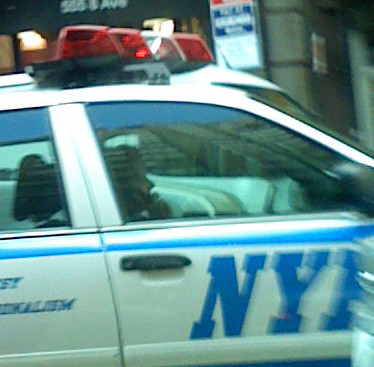
Picture is a bit fuzz and of poor quality, but I caught a DC cop driving through Georgetown, while chatting away on his cell phone sans hands-free device.

Now while I’ll admit to being occasionally guilty of talking on my cell while driving, shouldn’t our cops be exemplars of the code of law? Granted they’re only human, but come on! The least they can obey common laws while on duty, in uniform and driving a police car!

In DC, I’ve seen specific police traps that target motorists on cell phones. In fact, there’s often one not far from where this picture was taken. Surely, this cop has never been a part of those traps or ticketed anyone for cellphone violation that he himself is guilt of. I mean that would just reek of hypocrisy.

A question that occurs to me is: Could another DC Cop ticket this guy for the violation? Of course that would be a blatant violation of the Brotherhood of the Cop, but feasibly is that possible? Can an on duty officer receive a ticket?

Tuesday, June 2, 2009

In The News: Missoula City Council Bans Phone Use While Driving


The Missoula City Council has voted 6-5 to ban talking on a cell phone or texting while driving or cycling.

The council set a public hearing for June 22 to take comments on the zoning rewrite. And some opponents say they still want to get a lawyer other than the city attorney to determine whether some changes go too far.

Councilman Dave Strohmaier who proposed the measure says the ban takes effect within 30 days of the mayor's signature.

Officers will be allowed to pull people over if it looks like they are texting. They can't pull motorists over for talking on a cell phone, but they can write that ticket if they pull someone over for something else, like running a stop sign.

The ban notes exceptions for emergencies, such as calls to 911.

In The News: Ritter Signs Text Ban Bill


Drivers will no longer be able to text message, parents will be able to take time off of work to attend their children’s school meetings, and health care benefits will be extended for employees who were laid off — all due to a batch of bills that were signed into law by Gov. Bill Ritter yesterday.

Ritter signed 10 bills into law during a whirlwind trip that took him to Greeley and Fort Collins. Ritter has until Friday to take action on bills that came out of the 2009 legislative session.

“The governor’s focus this legislative session has been on creating jobs, helping businesses, creating new businesses and providing assistance and relief to families,” said Ritter spokesman Evan Dryer. “Many of the bills that the governor signed (yesterday) advanced those goals.”

Starting Dec. 1, drivers aged 18 and over will not be allowed to text message while driving. Under the new law, people under 18 will not be allowed to use a cell phone at all while driving.

Lawmakers amended the stricter version of HB 1094, which would have banned all use of cell phones for motorists, because it was bound to meet steep opposition in the Senate and was likely not to pass. Rep. Claire Levy, D-Boulder, the bill’s sponsor, said she would have preferred a sweeping ban on talking on a hand-held cell phone for all drivers, but added that the amended version of the bill was a step in the right direction.

“It is definitely better to have something than nothing,” she told the Denver Daily News. “It helps to raise the awareness of drivers that using their cell phone for any purpose is a hazard, and even though all we could get through was a ban on text messaging, I think that the debate has raised a lot of awareness about the safety issues associated with using your cell phone while driving.’

In The News: More States Want Cell Phone Ban


Teens. Cars. Cell phones.

The mix is as combustible as gas, fire and oxygen. And the result can be just as deadly.

Clinging to their social life preservers, teens are littering roads with mangled car parts from crashes where a cell phone was a factor.

But dozens of states across the country are starting to do something about the problem.

In Kansas and Missouri, legislatures this year passed laws targeting teen cell phone use. The new laws would:

Ban anyone 21 or younger from sending a text message while driving in Missouri. The law starts Aug. 28. It carries a fine up to $200 and two points would be assessed against a Missouri driver's license.

Prohibit anyone under 16½ in Kansas from using a cell phone while driving with the exception of emergencies. The new law starts Jan. 1. The law is part of Kansas' new graduated driver's license program.

The measures come at a time when cell phones are grabbing headlines, not just in highway crashes but on the country's railways as well.

Last week, a 25-year-old man driving on Interstate 29 apparently was texting when he slammed into the back of a St. Joseph, Mo., patrol car, knocking it into another squad car. Two officers were sent to the hospital with injuries.

A 19-year-old northeast Kansas woman who was killed in a car accident near Manhattan two weekends ago was texting while driving, investigators said. Ashley Umscheid, of Wheaton, was driving her 1995 Ford Ranger on Kansas 18
when she entered the median, overcorrected and flipped the vehicle.

Those wrecks came just weeks after a 24-year-old trolley driver in Boston rear-ended another trolley while texting his girlfriend. The crash sent 49 passengers to the hospital,

"I think it's almost an epidemic in this country that people think it's a good practice to basically be on a typewriter in your car," said state Sen. Ryan McKenna, who backed the texting ban in Missouri.

Texting for novice drivers is already banned in 10 states, and cell phones are banned for young drivers in 21 states and Washington, D.C. Legislatures in 24 states considered an estimated 51 bills this year that would have toughened cell phone laws.

While traffic safety experts generally consider cell phones a driving distraction for anyone, they are viewed as an even deadlier temptation for teens.

Imbued with a sense of invincibility and an over-confidence in their driving skills, teens tend to underestimate the risk that cell phones — and especially texting — pose on the highway, experts say.

"Teens have a distraction problem already. Now you're going to add cell phones into the mix?" said Russ Rader, spokesman for the Insurance Institute for Highway Safety.

Earlier this year, researchers at the University of Kansas listed driver distraction, especially among teens, as one of the top issues facing American transportation. They noted that a cell phone increases the chances of a young adult wrecking by up to 700 percent.

Missouri and Kansas have been tracking cell phone-related crashes for six or seven years.

Missouri had 451 cell-phone related crashes involving 15- to 19-year-olds last year, the most since 2003. Four were fatal, including a fiery crash in northeast Missouri last September that killed two, records show.

Kansas had 111 teen wrecks where a cell phone contributed. Only one was a fatality. Police said an 18-year-old in Wichita ran into a tree in while texting in snowy conditions.

As significant as the issue may be, experts question whether laws singling out an age group — or just a behavior like sending text messages — will do anything to curb the rising number of crashes involving teens and cell phones.

The insurance institute last year studied a cell phone ban for drivers under 18 in North Carolina. Researchers found that teens leaving high school in the afternoon changed little before and after the ban started.

About 11 percent of teen drivers were seen using phones before the law. It increased to 12 percent after the ban, the study found.

Rader, the insurance institute spokesman, said laws restricting cell phone use don't appear to be effective. He pointed out that most teens interviewed in North Carolina knew about the cell phone ban, but didn't think it was vigorously enforced.

"If drivers don't believe they are likely to be spotted and ticketed, they're unlikely to change their behavior," he said.

Another study of a ban on handheld cell phones for New York drivers turned up similar results. Cell phone use dropped immediately after the ban started, but a year later it had picked up again.

"As soon as the publicity died down, cell phone use went back up to almost where it was before," Rader said.

In The News: Cell Phone Ban - No Brainer for Steven Joyce

Texting while driving is a 'no brainer', Steven Joyce said today.

The Transport Minister wants action this year to ban drivers from using hand-held cellphones.

Mr Joyce said yesterday that he would seek rule changes to ban voice calls and texting, subject to recommendations from officials and Cabinet approval.

He is waiting for a Ministry of Transport report on public consultation about the use of cellphones while driving.

He understood it showed a "broad level of consensus" on banning the use of hand-held cellphones.

However, Mr Joyce said he was still awaiting advice on penalties.

"There are already laws, of course, about driver distraction and people shouldn't be driving their cars and texting and being distracted by cellphones at the same time," he said.

"That doesn't change but I think we've got to go ahead and get this rule in place."

It was likely hands-free cellphone use would be exempted.

Transport officials are busy preparing recommendations for public submissions on road safety actions expected to be taken next year to reduce dangers such as drink-driving and excessive speed.

But Mr Joyce said he was keen for the cellphone issue to be given high priority.

The public consultation followed a proposal by the previous Labour-led Government to fine drivers $50 and impose 25 demerit points for using hand-held phones.

Even cellphone giants Vodafone and Telecom supported bans early last year, after a young drink-driver was convicted of killing an elderly Ashburton couple while texting.

Road safety researchers say using a cellphone while driving increases the risk of crashing by up to nine times.

Using cellphones while driving makes motorists as impaired as drunk drivers, they say.

Cellphone use was blamed for 96 crashes in 2007, but the Automobile Association suspects the true figure is higher, as it believes the police have only recently made a routine practice of searching car wreckages for phones.

Drivers are likely to be allowed to hold conversations on hands-free connections, despite research at a simulator at Waikato University showing these to be little or no safer than using a hand-held phone.

AA spokesman Mike Noon accepted there was little difference, but said the organisation was taking a practical view in considering that a ban on hand-held phones - supported by 76 per cent of surveyed members - would at least deter drivers from looking down to make calls.

"All phone conversations are distracting, but there will be times when you do need to be contactable," he said.

"We've been using cellphones in cars for a long time, so we think it's reasonable to have a hands-free kit in your car.

"But we say calls should be kept to a minimum, and if you're in difficult driving conditions, don't answer the phone."

Mr Noon said discouraging youngsters from answering texts immediately was a particular problem, because of strong peer pressure for them to do so.

He had asked cellphone companies if phones could be programmed to bounce back texts automatically if recipients were driving, but had been told the technology was not readily available.

Mr Noon said parents should refrain from texting their children at night to ask where they were "because what could be more tragic than sending them a text that makes them have an accident?"

Waikato University road safety researcher Sam Charlton, an associate professor of psychology, said cellphone conversations of any kind almost doubled the time it took drivers to react to hazardous situations.

"Most people need about two and a half seconds to react to a hazard, but you can add a couple of seconds to that if you are talking on a cellphone."

An extra two seconds would add 55m to the stopping distance of a driver travelling at 100km/h.

Thursday, May 28, 2009

In The News: La. House OKs Hand-Held Cell Ban For Motorists


Using a hand-held cell phone while driving should be illegal in Louisiana, punishable with a $100 fine for a first offense, under a measure approved by the Louisiana House.

The 57-41 vote on Wednesday sends Rep. Austin Badon's bill to the Senate, which killed a similar bill last year. The measure would have no effect on the use of hands-free phones.
Article Controls

House members watered down Badon's measure slightly, by making the use of hand-held cell phones a "secondary offense," meaning a police officer could not pull someone over for that violation alone. Instead, a motorist could face the fine if pulled over for speeding, lane violation or another primary offense.

Badon, D-New Orleans, argued that handling a phone while driving is too much of a distraction for too many drivers. He overcame opposition from lawmakers including Rep. Barbara Norton, who complained that the bill would do nothing to reduce distracted driving caused by motorists eating, applying makeup, adjusting neckties or tuning a radio while driving.

"What is the difference if you're holding a cell phone or a bottle of water, or a cup of coffee?" said Norton, D-Shreveport.

The bill includes numerous exceptions in case of an emergency, so a motorist could call 911, a hospital, doctor's office, fire department or police station while driving.

A second offense would bring a $150, increasing by $50 for further offenses, up to $250. The measure would take effect in January.

In The News: Some Sobering Stats On Texting While Driving


On the one hand, I love texting on my iPhone. My wife and I often send each other text messages when she’s in a meeting at work, or I’m on a conference call at home. We don’t bother each other, but still get the message.

On the other hand, I hate texting, especially when it’s being done by someone behind the wheel of a car (or a Green Line trolley in Boston, but more on that below).

From the urban dictionary: “Text-end: When a text-messaging-distracted driver rear-ends the vehicle in front of [him]….”

True story: About three months ago, I pulled up to a stop sign in Falls Church, Va., near where I live. A young woman in a sporty car pulled up beside me. As she pulled up, I noticed she was texting on a cellphone, barely paying attention to what was happening around her. She continued to text through the stop sign and right up to the next stoplight. My car was still next to hers, so I rolled down my window and motioned to her. She looked puzzled and rolled hers down as well. I told her that she was endangering the life of every single person on the road if she continued to text while driving. Her reply was somewhat expected. She made a rude gesture with a certain digit and roared away when the light turned.

Driving while texting (DWT) is becoming a real problem. A real and dangerous problem. It’s bad enough that people can’t seem to stop themselves from talking on cellphones while driving. (Raise your hand if you’ve almost been hit by someone talking on his or her cellphone while driving. I see, almost everyone.) But at least cellphone talkers could pay some attention to the road. Not so with those DWT.

In a survey released last week by Vlingo Corp., a Cambridge, Mass., company that develops speech-recognition technology for mobile phones (and so, of course with a vested interest in the survey’s outcome, so keep that in mind), more than 26 percent of some 4,800 cellphone users surveyed across the United States admitted they had sent text messages while driving. The worst state was Tennessee, where 42 percent of those surveyed said they had done DWT.

But here is the kicker: While more than 26 percent of those surveyed said they texted while driving, 83 percent said the practice should be illegal. (Currently seven states and the District of Columbia outlaw it.) So if my math is correct, this means that at least 9 percent of those surveyed text even though they think it’s a bad thing.

Ah, humans. The spirit is willing, but the thumbs are twitchy.

It’s likely the 17 percent who said it should not be illegal are between the ages of 18 and 29. According to a Pew Research Center study last year, 74 percent of Americans in this age group use text messaging. A lot. And DWT does seem to be inversely proportional to the age of the driver – the younger you are, the more likely you are to do it. The Vlingo study found that 58 percent of teenagers did it, as did 49 percent of those aged 20 to 29. A little more than 13 percent of those aged 50-59 did so.

But it’s no joke. And the bigger the vehicle your driving, the greater the danger. Just ask the people who were on the Boston Green Line trolley that smashed into the back of another one recently. At the time of the accident, the driver was texting his girlfriend, he admitted. Dozens were injured, the driver lost his job, and the MBTA said it would ban on-the-job cellphone use and fire anyone caught using a cellphone, pager, or similar device during working hours.

But at least no one was killed in that accident. The same is not true of the horrific accident last September in California when, it is speculated, a train operator may have missed a stop signal because he was texting shortly before the accident.

Last year, Mark Melrose of Mountainside Hospital in Montclair, N.J., a spokesman for the American College of Emergency Physicians, told USA Today that most people probably don’t initiate text messages while driving, but find it hard not to respond if they receive one.

“It’s hard to ignore the temptation,” he said. “You think, ‘Tthis might be important, I’d better check.’ You know you shouldn’t be doing it, but you do it anyway.”

It’s time for the other 43 states to act. No texting of any kind, even (sorry Vlingo) speech texting, which still quadruples your chances of having an accident. But making laws isn’t the complete answer. Yes, it might stop older people from doing it. But I also think we need to attack DWT the way we attacked smoking, or drinking and driving. We have to deprive it of its coolness factor for young people.

Making it seem as stupid and dangerous as it really is will save a lot more lives than just saying in an adult voice, “Now kids, don’t you do that!”

Wednesday, May 27, 2009

In The News: Behind The Wheel


If you spend a large chunk of the day behind the wheel for business, as a teenager taxi service or just for the sheer pleasure of it, eventually your mobile phone becomes a temptation that's difficult to resist, whether it's ringing on the seat next to you or you have remembered an urgent call you need to make.

Of course, talking on a mobile phone while driving is not only dangerous ut against the law, so let's look at some alternatives.

A wired headset is cheap and effective, although often messy, while the loudspeaker mode on mobiles vary depending on the volume and quality of the speaker.

If your mobile supports Bluetooth, the best solution is to make the most of this and go wireless.

Bluetooth is a short-range (roughly 10 metres) wireless technology with built-in security and low power requirements that makes it ideal for mobile-phone activities, such as sending contact details to another handset, beaming photos to a PC, or one of the more popular uses, which is "pairing", or connecting to a hands-free speakerphone car kit.

Bluetooth speakerphone solutions come in all shapes and sizes, ranging from basic plug-and-play models with a simple speaker and microphone that attach to a vehicle's cigarette lighter up to units professionally fitted into the dashboard with a touch-screen display and full integration with the vehicle's sound system.

While the additional features found on some models are useful, the basic function all Bluetooth speakerphones provide is to wirelessly transfer the sound to and from a Bluetooth-enabled mobile phone, whether it's in your pocket, on the passenger's seat or even in a briefcase in the boot.

Once a secure connection has been made, incoming calls can be answered as well as making calls without having to touch your mobile phone.

Some of the other features Bluetooth speakerphones offer include caller ID, voice dialling and last-number redialling, and transmitting the audio from the phone to a spare FM radio frequency for improved quality, which also means if there's digital music stored on the mobile, this can also be heard through the car's stereo system.

When it comes to performance there are only a few key areas to look at. First and foremost, the product's speaker and microphone determine the sound quality of calls, and with the general noise inside a moving vehicle, the louder and clearer the speaker is, the better.

Another point is how well the built-in technology works that's designed to reduce vehicle noise, background voices and unwanted echo effects (such as hearing your own voice) during calls.

Extra features, form factor and general ease of use are also important to consider when choosing the right Bluetooth hands-free speakerphone to suit your needs.

In The News: Bluetooth Communications Devices That Make Canadian Driving Safer


With the upcoming restrictions on using cell phones and handheld devices for drivers in Ontario, it's time to rethink how you're going to handle your hands-free needs.

The Canadian Wireless Telecommunications Association (CWTA) reports that the new legislation, which is expected to come into effect this fall, means you will no longer be able to hold a phone to your head or use handheld devices for entertainment, emailing or texting while driving. GPS systems however can still be used if they're attached to the dashboard.

"It all boils down to common sense," says Marc Choma, director of communications for CWTA. "We're not opposed to hands free. We're looking at making the roads safer and eliminating distractions."

For those that can't live without their communications lifeline on the roads, there's a whole range of Bluetooth wireless, wired, voice activation and speaker phone technologies for safe, hands-free communications - from high-end speaker systems for audio/technophiles, to the more practical offerings for the occasional user.

"The Bluetooth space has expanded and now offers lots of options to meet the legislation and can support all price ranges," says Judy Mellett director of devices and accessories for Telus. "Many come with advanced control functions so you don't have to press the keypad to change the volume. Noise cancellation has also improved a lot."

In addition to improved sound quality and noise cancellation, some newer headsets now come with a quick charge feature that allows you to get five hours of talk time after a 15 minute charge.

Mellett says that over the last two years the industry has made it easier for drivers to comply since most handheld devices now come standard with a wired headset. Voice activated dialing is also a big help in keeping your hands on the wheel where they belong.

Those with a bigger budget and hours to log on the road can always opt for an in-car speaker system that connects to your FM radio and speaker system. Richard Lee, country sales manager for Nokia Original Accessories, car kits do cost more and in some cases there is an installation fee involved. "But they're ideal for someone who is in the car a lot."

As technology improves, speaker systems are also gaining popularity for the non-headset crowd. There is range of Bluetooth car kits that offer different mounting options, including a visor clip, suction cup or friction pad for mounting on the dashboard. Of course you can always use the speaker on the phone itself - as long as it's one button.

When selecting your hands-free device of choice, keep in mind your needs when you're out of the car. For example, it's easy to carry on using your Bluetooth headset when you're moving about on foot. Car speaker phones can also be used on the desktop.

Whatever the choice says Julie Smithers, associate director of media relations for Bell Canada, "The quality of speaker phones and wired headsets - and the price points - are constantly improving. The key is picking products that ensure you are keeping focused on the road at all times."

"Everybody's ears, budgets and style choices are different," says Lee. "But when it comes to hands-free options, there is definitely something for everyone."

Monday, May 25, 2009

In The News: Go Back to Drawing Board with Bills Restricting Cell Phone use

Texans as a general rule don't like the government telling them what they can and can't do, even if it may be for their own good.

Latest case in point: State lawmakers are trying to push through an assortment of bills banning Texans from talking on their cell phones while they're driving.

For starters, they're targeting teenagers, which may make senses, but equal attention should be focused on adult drivers as well.

Unfortunately, limiting cell phone use by teens appears to be as far as the Texas Legislature is willing to go this session. The scattershot approach to the issue may be part of the problem with getting legislation approved. There are proposals to:

-Prohibit only teens from talking on their cell phones while driving;

- Ban the use of cell phones only in school zones;

- Make it illegal for all people to talk on the phone while driving on any Texas road.

"People seem to forget driving on the roads of the state of Texas is privilege, not a right," said Rep. Trey Martinez Fischer, D-San Antonio. "Talking on the cell phone and text messaging while driving are probably two things we shouldn't encourage people to do in the state and it is unfortunate we can't have that debate on the House floor."

His point is well-taken, considering the results of a study conducted by the Center for Risk Studies at Harvard University. It showed 6 percent of motor vehicle accidents are caused by people driving while using a wireless phone. That's the equivalent of 2,600 deaths and 12,000 injuries a year.

The Harvard study explains why the National Safety Council, which was chartered by Congress, is recommending states ban cell phones while driving - even hand-free phones.

Talking on a cell phone while driving isn't the only serious distraction you can see in Lubbock every day.

Motorists are risking injury to themselves or others by listening to music too loud, applying makeup, eating food, and juggling a cup of hot coffee or a cold soda.

Texting while behind the wheel, however, leads the list of preventable hazards as it demands more concentration than any of the others.

"What are you going to do with other distractions?" asks Joe Pickett Pickett, D-El Paso, chairman of the House Transportation Committee, the 11-member panel assigned to screen such legislation.

It's clear to us state lawmakers need to go back to the drawing board on this matter for more discussion, debate, and resolution - even if it's not during this session, which ends June 1.

There's some good ideas here, but they're scattered in so many different bills it's impossible to predict if their effect would be meaningful if approved.

Something needs to be done to address the problem, not only with teens but with all drivers - whether it's now or when the next session convenes in 2011. We're still a long way from where we need to be in terms of public safety on the highways.

In The News: 60% of Teens Drive While Texting, Despite Knowing Dangers


Another day, another study -- it seems like every time we turn around, there's another body of research revealing that, even though they know it's dangerous, stupid, and should be illegal, teens still text-message while driving.

The latest study paints a slightly rosier picture than the last one we saw (which said that 85-percent of teenage girls and almost 60 percent of boys were guilty of driving-while-texting).The survey -- conducted by research firm Toluna on behalf of voice-recognition company Vlingo -- found that 60-percent of teens admitted to texting at the wheel. It's not just kids that are guilty, though, since 26-percent of all users surveyed said that they do it too.

83-percent of respondents agreed that driving-while-texting (or, DWT, as many people are calling it) should be illegal. Whether it's legal or not, DWT is obviously very dangerous. Sadly, if these studies are any indication, it's clear that people probably wont stop tapping out messages while they're switching lanes. Maybe we'll start taking the train to work.

In The News: Technology to Stop Phone use in Cars Flawed

SALT LAKE CITY - Many parents would love to be able to give their teenagers a cell phone that couldn't be used while driving. Now some inventors say they have come up with ways to make that possible, but they appear to be relying on wishful thinking.

One product to hit the market, $10-a-month software by Dallas-based WQN Inc., can disable a cell phone while its owner is driving. It uses GPS technology, which can tell how fast a person is traveling. But it can't know whether the person is driving — and therefore it can needlessly lock a phone. WQN, which sells cell phone and Internet security software under the name WebSafety, says it signed up about 50 customers for its first month of service.

Aegis Mobility, a Canadian software company, plans to release a similar Global Positioning System-based product this fall, known as DriveAssistT. Aegis is in talks with big U.S. wireless phone carriers, which would have to support the software and charge families a fee of probably $10 to $20 a month, said David Teater, the company's vice president.

In The News: State's Ban on Cell Phones while Driving has meant Thousands of Fines


New Jersey transportation officials say a year-old state law banning cell phone use while driving has resulted in nearly 109,000 summonses issued in the past 11 months.

That's almost double the amount of tickets handed out during the previous five years for the offense.

A state law signed on March 1 last year makes talking on hand-held cell phones while driving a primary offense. That means police are now able to stop motorists just for talking on the phone.

Division of Highway Safety director Pam Fischer said the primary law is making a difference, resulting in about 10,000 tickets a month.

New Jersey is among four states and the District of Columbia that have made using a cell phone while driving a primary offense.

Wednesday, May 20, 2009

In The News: Driver Attending to Cell Phone hits Police Car


A man was apparently texting on his cell phone Tuesday when he ran into the back of a stopped St. Joseph police patrol car, knocked it into another squad car and sent two police officers to the hospital, police said.

The accident occurred after police stopped southbound traffic on Interstate 29 to work a one-car accident.

The man sped around stopped semi-trucks and ran into the patrol car, police said. He was arrested on an unrelated warrant. The officers suffered minor injuries.

In The News: Rock Springs Weighs Ban on Phones While Driving

ROCK SPRINGS, Wyo. (AP) - An ordinance that would ban drivers from talking on their cell phones is moving ahead in Rock Springs.

The Rock Springs City Council plans to hold a final reading of the proposed ordinance on Tuesday. The council will act on the proposal after that.

The prohibition would cover talking on cell phones in addition to text messaging, taking photographs and any other use that diverts a driver's attention. The ordinance would not apply to police and operators of emergency vehicles.

Violators of the ordinance could face a fine of up to $750 and up to six months in jail.